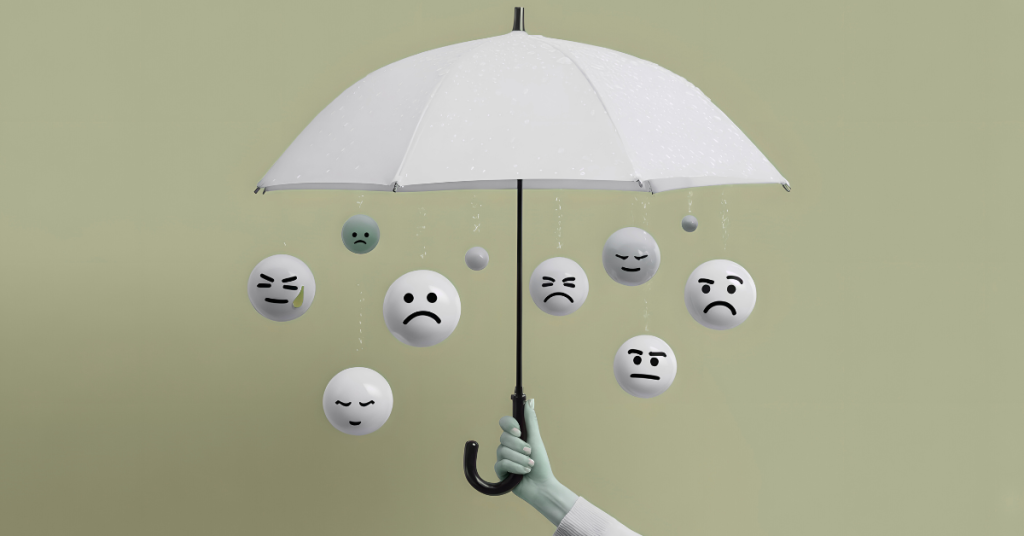
How do our feelings shape our reality?
If you have ever reacted strongly to a situation and later wondered, Why did I respond like that?, you are not alone. Understanding how feelings create reality helps explain why small moments sometimes lead to big emotional reactions. It also shows us how our inner world (thoughts and feelings) quietly shapes our behavior, relationships, and lived experience.
The Reality Creation Formula explains how our stories which are our thoughts and feelings drive behavior, and how behavior produces results that reinforce our reality. When we understand this formula, we gain awareness.
The Reality Creation Formula
The Reality Creation Formula is simple, but powerful:
Facts → Story (Thoughts & Feelings) → Behavior → Reality
A fact is neutral. It is something that happens. The story we tell ourselves about that face creates a feeling. That feeling then drives our behavior, and our behavior creates our reality.
This is the foundation of how feelings create reality. We do not experience life directly. We experience life through interpretation.
This blogpost will help you understand the RCF and how it works.
Understanding Primary Emotions
Primary emotions are immediate, instinctive, and powerful. The most common primary emotions are:
Fear
Anger
Sadness
Happy
Surprise
Disgust
These emotions are wired into the nervous system. They exist to protect us. When a primary emotion activates, the body prepares to act quickly. This is where survival responses come in.
Fear and anger, in particular, are strong motivators. They push us to act fast, often without thoughtful processing. This is why primary emotions can override logic and reflection.
When fear or anger takes over, we are no longer responding to what is actually happening. We are responding to what we believe is happening or what we fear might happen next.
Fight or Flight
When a primary emotion is triggered, the nervous system can move into fight or flight mode. This state limits our ability to reason clearly. Instead of engaging with the person in front of us, we engage with an idea.
That idea might sound like:
“What was that noise.”
“This always happens to me.”
“What if this amazing day turns bad.”
At that point, the brain shifts from connection to protection. You are no longer having a conversation. You are defending against a perceived threat.
This is why emotional reactions often feel disproportionate. On a scale of 1 to 10, the situation might be a 2 or 3, but the reaction feels like a 9. The response is not about the present moment. It is about stored emotional memory.
Secondary Emotions
Secondary emotions develop in response to primary emotions. They add complexity to the emotional experience.
The Emotional Layers:
Anger may turn into frustration, irritation, or resentment.
Fear may turn into anxiety, worry, or control.
Sadness may turn into loneliness, discouragement, or withdrawal.
Happiness may turn into excitement, anticipation, or attachment.
- Surprise may turn into confussion, shock or amazement
- Disgust may turn into shame, withdrawl, or embarrassement.
Secondary emotions are shaped by interpretation, habits, and past experiences. They often feel more familiar and socially acceptable than primary emotions, but they still stem from the original trigger.
This layered emotional response explains why humans are complex. We carry emotional history. We bring past experiences into present moments without realizing it.
Emotional Triggers and Stored Memory
Many emotional reactions are not created in adulthood. They are remembered responses. A present-day situation activates an emotional pattern formed years earlier.
A disagreement with a spouse may trigger childhood feelings of not being heard. A conversation with an adult child may activate old fears of failure or rejection. A comment from a sibling may bring back unresolved competition or hurt.
When this happens, we are not reacting to now. We are reacting to then.
This is a critical insight in understanding how feelings create reality. Without awareness, we repeat emotional patterns automatically. With awareness, we can pause and choose differently.
How Feelings Drive Behavior
Feelings fuel our behaviors. Fear motivates avoidance or control. Anger motivates defense or attack. Sadness motivates withdrawal. Excitement motivates pursuit.
Behavior always makes sense when you understand the feeling underneath it.
People do not overreact because they are weak. They react because a primary emotion is driving the nervous system. The behavior is an attempt to regulate discomfort.
This is why logic alone does not create change. Emotional awareness does.
Relationships and Emotional Escalation
We see emotional reactivity most clearly in relationships. One comment, one look, one misunderstanding can escalate quickly.
When emotions take over, people stop responding and start reacting. Listening shuts down. Assumptions take over. Connection gets replaced with protection.
The result often reinforces the original fear or anger, creating a feedback loop. This is how our behaviors shaped by our stories become our reality.
Creating a New Emotional Pattern
Instead of asking, “Why did they do that?” try asking:
“What story am I telling myself?”
“What feeling is driving this reaction?”
“How do I want to show up?”
When we pause it engages the higher brain. Moving from fight or flight, it allows you to separate the present moment from past emotional memory.
When you change the story, you change the feeling. When you change the feeling, you change behavior. When behavior changes, results change. This is the Reality Creation Formula in action.
Awareness Creates Choice
Understanding how feelings create reality is not about suppressing emotion. It is about learning how emotion works.
Primary emotions are powerful, but they are not instructions. They are signals. When we learn to listen without immediately reacting, we regain agency.
You are not broken. You are layered. And with awareness, those layers can become sources of wisdom instead of triggers.
Reality does not begin with facts. It begins with interpretation. The story , thoughts and feelings we add to the fact. And interpretation is something you can learn to gently reshape.
Ready to Take Your Life to a New Level
I offer a free 25-minute clarity call for women who feel emotionally overwhelmed, reactive in relationships, or stuck in patterns they don’t fully understand yet. It’s a calm, grounded conversation where we look at what’s happening beneath the surface and help you feel more steady, clear, and supported.
There’s no pressure and nothing to prepare. Just a space to breathe, reflect, and gain perspective.
If this feels like the right next step, I would love to connect with you.
You can schedule your free clarity call through the link below.